Astronomy
Planets, constellations, and the questions children ask. Why is the sky dark at night. Is Pluto still a planet. Could I jump higher on the Moon. Where does space end. Are there aliens. This section is built for those questions, and the answers are told as stories, not a collection of disconnected facts. Planet guides that read like adventures, surprising facts for car journeys, creative stories for cloudy nights, and book reviews. Read it together and let the questions lead.
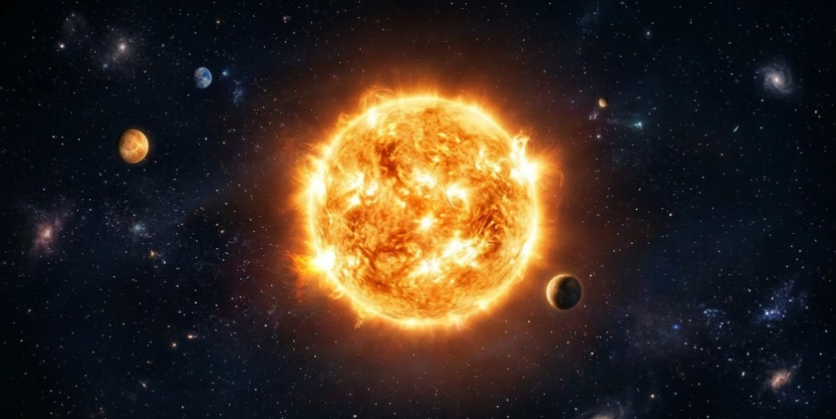
All About Planets (and More)
See all55 Cancri e: The Planet That Could Be a Diamond
Forty light-years away, a planet completes a full year every eighteen hours. Its surface is hot enough to melt iron. As much as a third of its mass may be diamond. 55 Cancri e is the strangest world we've calculated before we've seen, and we still don't quite know what it is.
Pluto: The World With a Heart
he most famous photograph of Pluto shows a heart. A bright, smooth plain on a darker, cratered face, roughly the size of Texas. Made of frozen nitrogen, it slowly turns over like a lava lamp on a million-year cycle. Nobody had ever seen it until 2015.
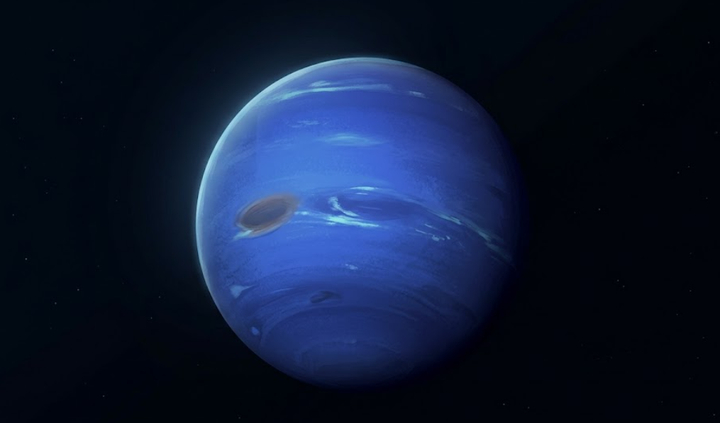
Neptune: The Planet That Shouldn't Be This Angry
On Neptune, the wind blows at 2,000 kilometres per hour. The planet sits thirty times further from the Sun than we do, where sunlight barely reaches. It should be a still, frozen marble. Instead it has the most violent weather in the solar system. Nobody is sure why.
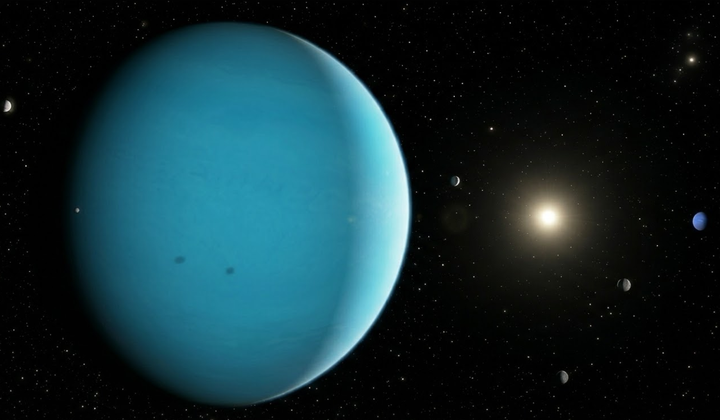
Uranus: The Planet That Fell Over
Uranus looks like the quietest planet in the solar system. Beneath that blank face: a world knocked sideways by a planet-sized impact, hiding its heat behind invisible barriers, raining diamonds into its own depths. We've visited once. We stayed a few hours.
Astronomy News
See all
What Two Comets Are Leaving Behind
This week, Earth is walking through the dust of a comet that visited 40 years ago and won't return until 2061. Meanwhile, scientists released the first close-up data on an interstellar comet older than our Sun. Two comets, two timescales, the same week.

Waves Nobody Has Seen and Life Nobody Would Recognise
On Titan, a gentle breeze kicks up waves three metres tall that roll in slow motion. On a lava world, hurricane-force winds barely make a ripple. The same week, a new study asks: what if alien life can only be found by the pattern it leaves across many planets at once?

Things Nobody Alive Has Ever Seen
Two sights arrived within a week of each other. Artemis II's crew watched a 54-minute solar eclipse from the far side of the Moon. A comet last seen by Neanderthals is now bright enough to catch with the naked eye. Neither will ever happen the same way again.

A Star That Died Without Exploding
A star in the Andromeda galaxy was supposed to explode. Instead, it just went dark. Scientists found it hiding in old telescope data: a supergiant that skipped the supernova and collapsed straight into a black hole. It's only the second time we've caught a star doing this.
Book Reviews
See allRoaring Rockets by Tony Mitton
Ages 3-5. Some kids don't want to know how a rocket feels. They want to know what it's called. The bit on top, the bit that falls off, the bit with the little flag. This is the book for that kid.
Professor Astro Cat's Frontiers of Space by Dominic Walliman
Ages 8-12. Most kids' space books either oversimplify or condescend. Professor Astro Cat does neither. Dominic Walliman has an actual PhD in quantum physics and runs the Domain of Science YouTube channel. The cat is a bit. The science is real.
If You Decide to Go to the Moon by Faith McNulty
This isn't a bedtime book. Thirty something pages of text, dense Steven Kellogg illustrations you could stare at all evening, a story that takes its time. If you pick it up at 7:45 when your kid is already rubbing their eyes, you've made a choice.
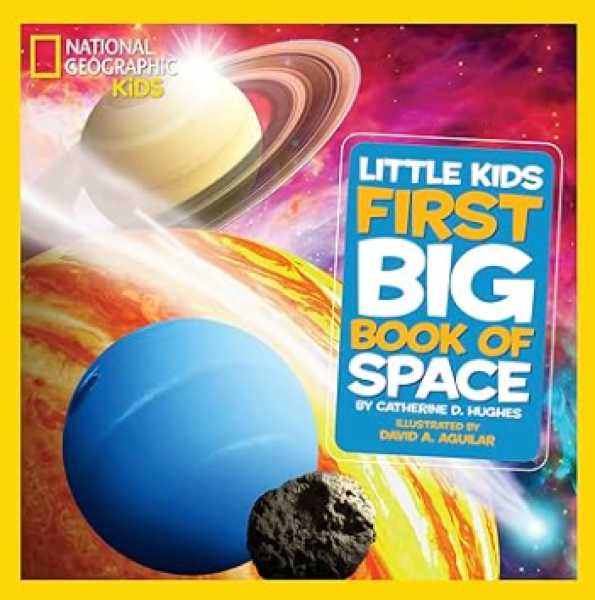
National Geographic Little Kids First Big Book of Space by Catherine D. Hughes
A reference book for kids who sit still and want to know things. Not the ones who need a story. The ones who ask why and don't want a simplified answer. The ones who will come back to this on their own and read it quietly on the floor while they're supposed to be getting ready for school.
Cloudy Nights Stories
See all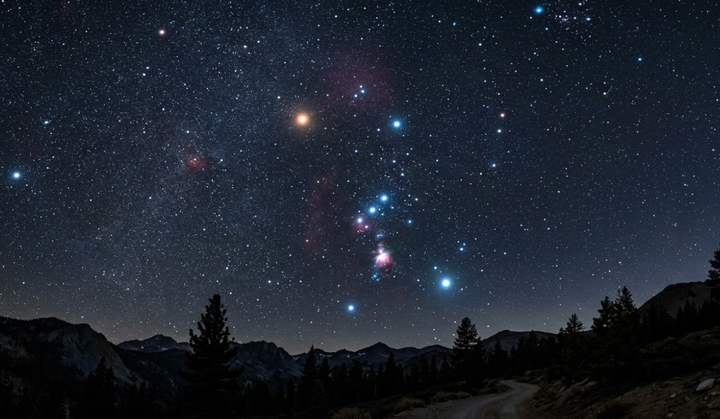
The Night We Met the Hunter
Ages 8-12. Nell went outside during a power cut and the sky filled with stars. Her dad pointed out Orion. She learned that the hunter's shoulder is a dying red giant, his foot burns 120,000 times brighter than the Sun, and the whole constellation only looks like a hunter from where she stood.

The Planet That Spins the Wrong Way
Ages 8-12. "So if I lived on Venus," she said slowly, "I'd have my birthday before the Sun came up?" "You'd have your birthday before the Sun came up twice." "And the Sun would rise in the…" She stopped. Worked it out. "The west?"

The Night the Sky Fell
Age 5-8. Something moved. A line of light. Quick and bright. It slid across the sky like someone had drawn on it with a white crayon. "Did you see that?" Lila whispered. She held very still. Her eyes wide. Then another one came.

The Day We Built an Eye Big Enough to See the Beginning
Age 8-12. Lena pressed her finger against the faintest red dot on the screen. "This galaxy. When this light left, did Earth even exist?" "No. Not even close. The Sun hadn't formed yet." She pulled her hand back like the screen was hot
Fun Facts: Did you know?
See allSaturn Could Float in Water. And There's a Hexagon on Top.
Saturn weighs ninety-five times what Earth weighs, but its density is less than water. If there were a bathtub big enough, Saturn would bob. And at its north pole there is a six-sided storm thirty thousand kilometres across that nobody fully explains.
Mars Has the Biggest Volcano in the Solar System. And Its Moon Rises in the West.
Mars is half the diameter of Earth but holds the biggest volcano in the solar system. Olympus Mons is three times the height of Everest, with a base the size of Italy. Mars's smaller moon, Phobos, orbits so fast it appears to rise in the west, twice a day.
The Moon Used to Be Closer
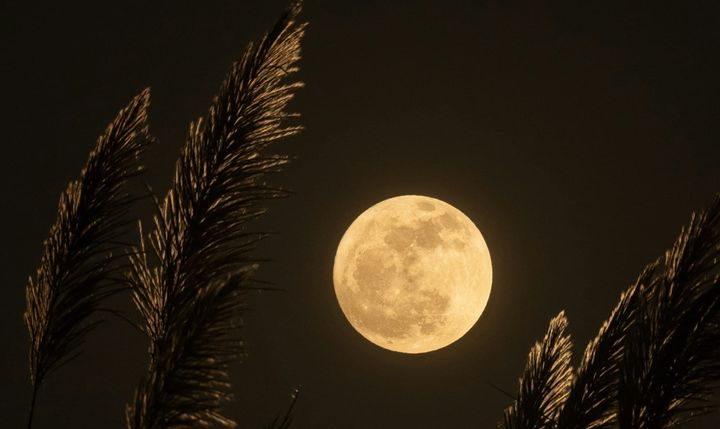
The Moon hasn't always been where it is now. Four billion years ago, our day was six hours long because the Moon was much closer. It's been pulling away ever since, slowly enough you can't see it, but enough that total solar eclipses won't last forever.
It Rains Diamonds on Neptune. It Snows Metal on Venus.
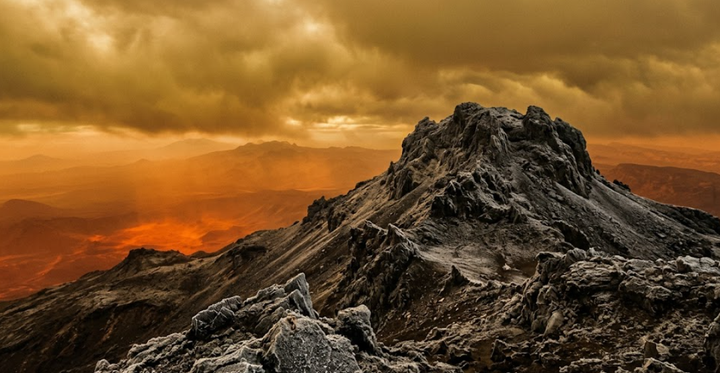
Two facts about weather in the solar system, neither of which involves water. Deep inside Neptune, methane is crushed into diamond and falls through the planet in a slow, impossible rain. On Venus, metals evaporate off the hot valleys and condense as frost on the mountains