It Rains Diamonds on Neptune. It Snows Metal on Venus.
Two facts about weather in the solar system, neither of which involves water. Deep inside Neptune, methane is crushed into diamond and falls through the planet in a slow, impossible rain. On Venus, metals evaporate off the hot valleys and condense as frost on the mountains
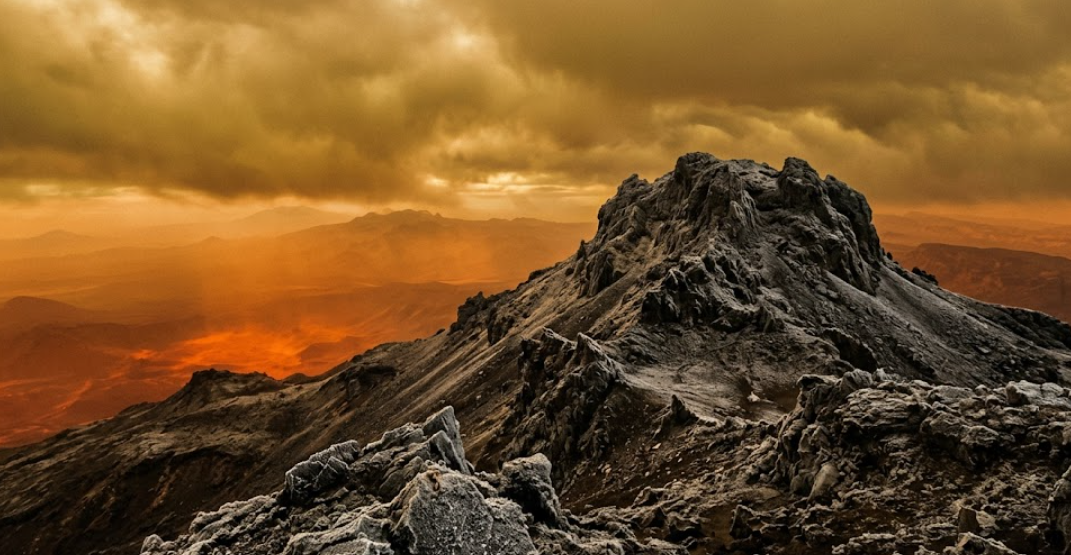
Two facts about weather in the solar system. Neither involves water. Both are real, and both are strange enough to drop into dinner without warning.
Diamond Rain on Neptune
Deep inside Neptune, it rains diamonds.
Not "something a bit like diamonds" or "scientists think maybe." Actual diamonds. The kind you'd recognise if one fell into your hand. The idea was first proposed in 1981 and it sat there as a clever hypothesis for decades, until scientists at Stanford finally recreated the conditions inside Neptune using lasers and watched diamonds form in real time. They even got a second confirmation in 2024.
Here is how it works. Neptune is full of methane, which is just carbon and hydrogen stuck together. Go deep enough into the planet and the pressure becomes unimaginable: millions of times heavier than Earth's atmosphere, with temperatures of thousands of degrees. Under that kind of squeeze, the methane gives up. The hydrogen peels away, and the lonely carbon atoms get crushed together so tightly they form diamond.
And because diamond is dense, the diamonds then sink. Slowly, over thousands of years, they drift down through the planet's interior like a very expensive, very slow snowfall. Scientists think some of them might grow to be meter-sized. Diamonds the size of a child, falling through a planet.
I keep trying to picture it and failing. Neptune is four and a half billion years old. It has been doing this the entire time.
The same diamond rain forms inside Uranus, the planet knocked on its side by an ancient collision, where crystals may grow for millions of years before vaporising and starting over.
Heavy Metal Snow on Venus
Venus is the hottest planet in the solar system. Its surface sits at around 465 degrees Celsius, which is hot enough to melt lead. So obviously Venus has snow.
I know. But it does. Not everywhere: only on the tops of its mountains, where things are ever so slightly cooler. When NASA's Magellan spacecraft mapped Venus with radar in the 1990s, the mountaintops came back unusually bright, as if something reflective was sitting on them. The only explanation that fits is frost.
But frost made of what? Water is out. It would boil instantly. After years of chemistry, scientists worked out the most likely answer: the "snow" is probably made of lead sulfide and bismuth sulfide. Metals. On Venus, the valleys are so hot that metals simply evaporate, drifting up into the atmosphere as a kind of metallic mist. When that mist reaches the cooler mountaintops, it condenses and settles as a thin, glittering frost. Millimetres thick. Shining dully across peaks that no human will ever stand on.
So if you could somehow survive the acid clouds and the crushing pressure and the oven-heat and climb the highest mountain on Venus, you'd find yourself in something like a winter scene. Just not one you'd want to scoop up and make a snowball with.
Earth has its own weather, and we spend a lot of time complaining about it. But once you know that other planets get diamond storms and metal frosts, rain starts to feel like a small, polite thing. Water that falls from the sky and lands on your head. What a reasonable way for a planet to behave.
And the metal frost on Venus is only the latest oddity of a world that looks like Earth's twin and behaves like nothing of the kind.
For more from the solar system's weirder corners, Venus is a world where a single day lasts longer than its entire year, and its resemblance to Earth stops the moment you look closely. The diamond rain itself gets a deeper look in the guide to Uranus, the planet knocked on its side. And if you want one more piece of weather that doesn't behave like ours: sunsets on Mars are blue.
For more like this, browse the rest of the Did You Know? collection, or head up to the wider astronomy hub for planet guides, news, and night-sky stories.