Science & Math
The children who struggled with maths were missing a spatial foundation the curriculum quietly assumes is there. One month of coding changed how six-year-olds think about problems that had nothing to do with a screen. The digit 8 is three different numbers depending on how you slice it. Three sections: brain development research translated into plain language, dinner table maths that surprises, and science experiments built from what is already in your kitchen.
Brain Development
See allWhat ten-year-olds know about fractions predicts their algebra grade at sixteen
Robert Siegler tracked 4,276 children for six years. The skill at age ten that predicted their algebra grade at sixteen wasn't IQ, working memory, or arithmetic. It was fractions. Most parents worry about times tables. They are worrying about the wrong thing.
AI Lets Adults Skip Work They Already Know. It Lets Children Skip Building It.
An adult who asks AI to summarise a long document is offloading a task the brain already knows how to do. A nine-year-old who asks AI to write a school story is offloading work the brain has not finished learning. The research is thin, but it points one way.
What Shapes a Child's Brain? Mostly, Things That Happen at Home
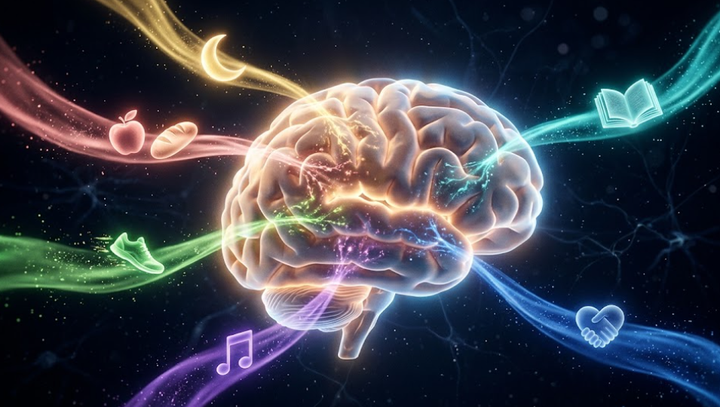
A 2024 review identified six factors that shape brain development between ages two and eleven. Five of them are decided at home, not at school. Sleep, nutrition, movement, music, a nurturing environment. The interesting things parents focus on sit on top of conditions that are usually invisible.
When Teenagers Stop Studying Maths, a Key Brain Chemical Drops
Oxford scanned 87 teenagers. The ones who'd stopped maths had measurably less of a specific brain chemical. A second experiment confirmed it wasn't there before they stopped. The study is about 16-year-olds. Its relevance sits with parents of six-year-olds.
Critical Thinking (In the AI Age)
See allWhy kids who argue with AI are building something the others aren't
MIT put 54 university students into three groups: ChatGPT users, search engine users, no tools. EEG caps throughout. By the third essay, the ChatGPT group had stopped writing and were asking the AI to do it. The implication for children is uncomfortable.
When the computer makes things up
Ask any AI chatbot for the source of a famous quote and a meaningful share of the time you'll get a confident, complete, invented citation. A book that doesn't exist. A real historian on a topic they've never written about. The verification habit isn't new, just newly urgent.
Why children trust AI more than adults do
Every confidently wrong AI answer is a small free lesson, if you slow down long enough to take it.
Dinner Table Math
See allA Strip of Paper Can Have Only One Side
Cut a long strip of paper. Twist one end half a turn. Tape the ends together. You now have a Möbius strip, named after the German mathematician who studied it in 1858. Draw a line down the middle of the strip without lifting your pen. The line goes all the

The Maths Hiding in a Sunflower
A sunflower head holds up to 2,000 seeds, none sitting on top of another. The trick is an angle of 137.5 degrees, also used by pinecones, pineapples, hurricanes, and the spiral arms of galaxies. Maths is everywhere if you know where to look.
Twenty-three People Is Enough for a Shared Birthday
Twenty-three people in a room give you a coin flip on a shared birthday
The Fraction Hiding in 142857
Type 1 ÷ 7 into a calculator. The screen fills with 0.142857142857, the same six digits cycling forever. Those digits appeared in an earlier article in this series, where 142857 was presented as a number that rearranges itself when multiplied. It was a fraction all along.
Science Experiments
See allHow Salt Makes Ice Cream
Isla had checked the freezer three times. There was no ice cream. We made some anyway, with salt, ice, and a freezer bag. Ten minutes of shaking later, the cream gave up and froze. She now explains the fridge to anyone who will listen.
The Penny Bridge
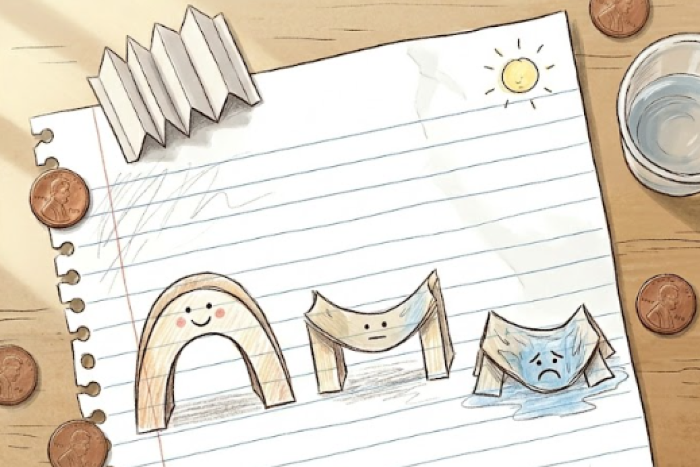
A flat sheet of paper holds one penny before it gives up. Fold the same sheet into a concertina and it holds twelve. Sam was eight, in wet socks, and wanted to know why real bridges don't bend. Twenty minutes at the kitchen table, and he worked it out himself.
The Day We Launched a Marshmallow
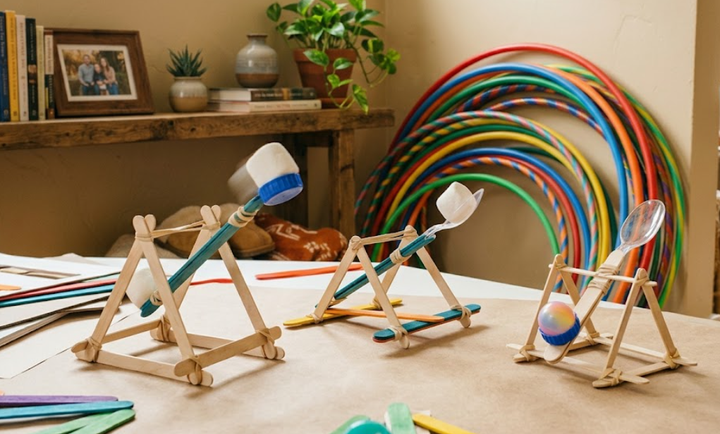
It started because Noor wanted to launch a marshmallow. Not eat it. Launch it. Five popsicle sticks, a rubber band, and one very determined child later. She called it "the stick being angry."
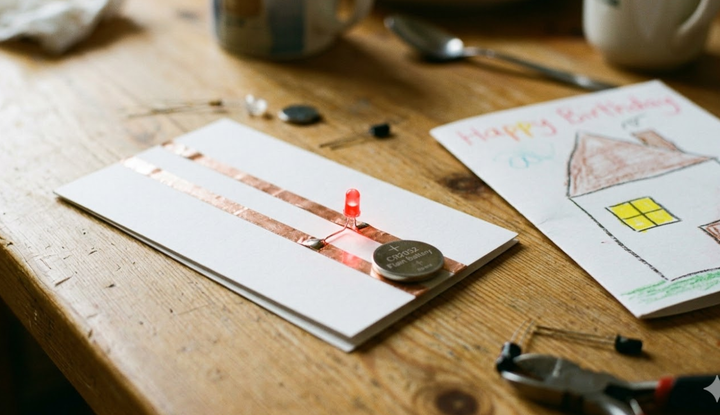
Roads for Electricity
He pressed the battery down and the LED lit up. Red, steady, undeniable. "I made that happen," he said. "With tape." Then he built his mum a birthday card with a glowing window and copper tape roads hidden on the back. She asked if he'd made it. "I built a circuit. On paper. With roads.