

Turn Curiosity Into Science, Robots & the Stars

Browse Topics →

Hands-on STEM guides written for parents and kids - no PhD required. Discover robotics projects, astronomy activities, and science experiments that actually excite young minds.

📚

139

Articles & guides

🧒

Ages 4-12

And their parents

🤷‍♂️

100%

Non-technical parent friendly

Browse by Topic

Everything a curious child aged 6-12 and their parents need to know

Science & Math

Science & Math

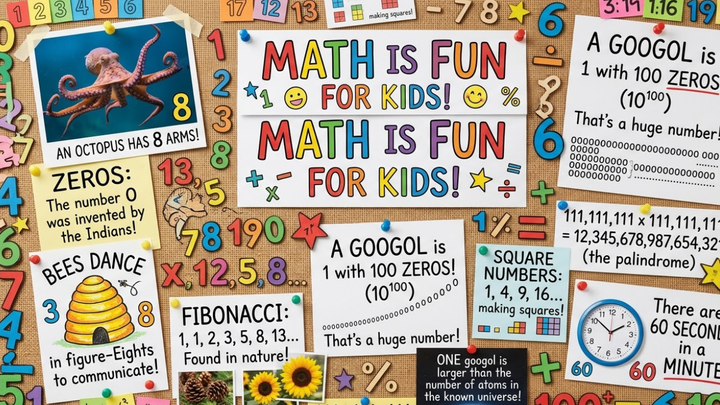
The children who struggled with maths were missing a spatial foundation the curriculum quietly assumes is there. One month of coding changed how six-year-olds think about problems that had nothing to do with a screen. The digit 8 is three different numbers depending on how you slice it. Three sections: brain development research translated into plain language, dinner table maths that surprises, and science experiments built from what is already in your kitchen.

Robotics

Robotics

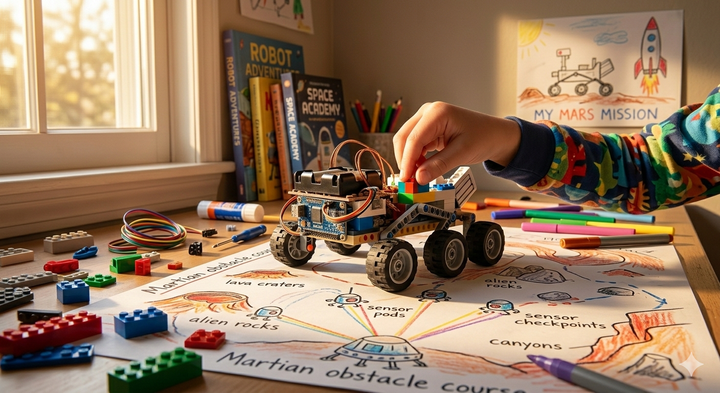
Four-year-olds have between three and fifteen minutes of focused attention and opinions strong enough to derail a Tuesday. Thirteen-year-olds want to build the thing they saw on YouTube at midnight and want it working by Thursday. This covers the whole range. Age-by-age guides on what children can actually do at each stage. Kit reviews that say when something is overpriced. Activities from what is already in your kitchen.

Astronomy

Astronomy

Planets, constellations, and the questions children ask. Why is the sky dark at night. Is Pluto still a planet. Could I jump higher on the Moon. Where does space end. Are there aliens. This section is built for those questions, and the answers are told as stories, not a collection of disconnected facts. Planet guides that read like adventures, surprising facts for car journeys, creative stories for cloudy nights, and book reviews. Read it together and let the questions lead.

Find The Right Starting Point

What The Research Says

Articles grounded in science and child development research

See all
What Shapes a Child's Brain? Mostly, Things That Happen at Home
Research-Backed

What Shapes a Child's Brain? Mostly, Things That Happen at Home

A 2024 review identified six factors that shape brain development between ages two and eleven. Five of them are decided at home, not at school. Sleep, nutrition, movement, music, a nurturing environment. The interesting things parents focus on sit on top of conditions that are usually invisible.

Tom R ·
One Month of Coding Changed How Six-Year-Olds Think. Not About Coding.
Research-Backed

One Month of Coding Changed How Six-Year-Olds Think. Not About Coding.

Researchers gave first graders one month of coding lessons and measured what changed. Not their coding ability. Their ability to plan, inhibit impulses, and think through problems that had nothing to do with a screen.

Tom R ·
Research-Backed

The Skill That Doesn’t Look Like Maths

The skill that best predicted their arithmetic performance three years later wasn't intelligence or early number ability. It was something most maths lessons never mention.

Tom R ·
Five minutes. That's all it takes for a motivated kid to give up on robotics.
Research-Backed

Five minutes. That's all it takes for a motivated kid to give up on robotics.

Motivated kids don't quit because they can't do it. They quit because they were stuck for five minutes with no one nearby. That's the whole difference between a child who loves robotics and one who says they hate it.

Tom R ·
The hidden skill that predicts maths success isn't taught in schools. New research says you're probably already building it.
Research-Backed

The hidden skill that predicts maths success isn't taught in schools. New research says you're probably already building it.

The children who struggled with maths weren't less intelligent. They were missing a spatial foundation the curriculum quietly assumes is already there and nobody notices until the numbers get harder.

Tom R ·
How Robotics Changes Young Children's Brains: Research
Research-Backed

How Robotics Changes Young Children's Brains: Research

Eye-tracking study of 6-8 year olds doing robotics found their visuospatial working memory improved 4% every 2 months, logical reasoning jumped, and processing speed increased. Researchers watched kids' brains literally rewire in real-time.

Tom R ·