Nothing Works the Way You'd Expect On the Moon you'd weigh a sixth of what you weigh now. On Jupiter, more than double. And on Venus, a single day lasts longer than its entire year, the Sun rises in the west, and nobody is entirely sure why.
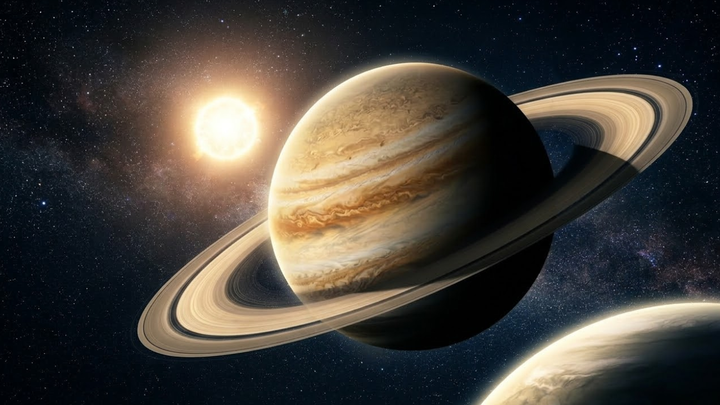
Saturn: The Planet That Wore Its Crown Late Saturn's rings may have formed while dinosaurs walked the Earth. The planet is 4.5 billion years old, but its rings are perhaps only 100 million. They are slowly disappearing. We just happen to be alive at the right time to see them
A Star That Died Without Exploding A star in the Andromeda galaxy was supposed to explode. Instead, it just went dark. Scientists found it hiding in old telescope data: a supergiant that skipped the supernova and collapsed straight into a black hole. It's only the second time we've caught a star doing this.
Jupiter: The Planet That Could Have Been a Star 280 characters: "Beneath Europa's smooth shell of ice lies a saltwater ocean that may contain twice as much water as all of Earth's oceans combined. A spacecraft is on its way right now to find out if something could be living in it. Nobody knows yet. That is the best kind of answer
Cold Footprints on Jupiter, and a Comet Heading for the Sun Cold spots in Jupiter’s aurora caused by its moons. Scientists have known about these footprints for years. But until now, they’d only measured how bright they were, never what was physically happening inside them.
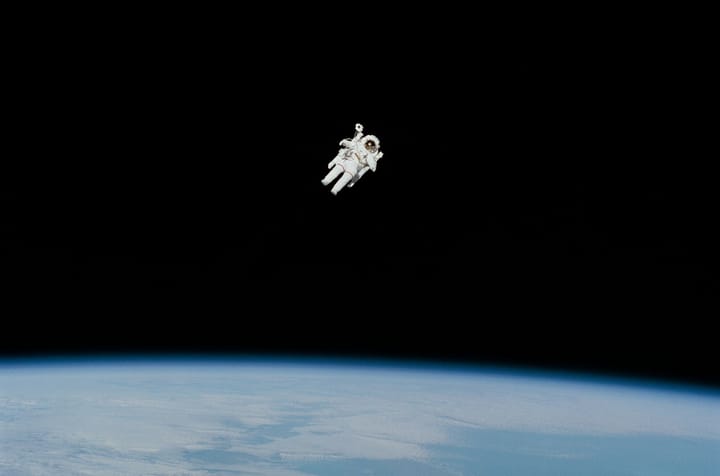
Humans Are Going Back to the Moon No human has left low Earth orbit since 1972. Artemis II will send four astronauts around the Moon and back, further from Earth than anyone in history. After fifty-three years of looking, we're finally going again.
Space Is Completely, Perfectly Silent If you've ever heard an explosion in a space film: that's fiction.